Showing posts with label cooking. Show all posts

Sunday, September 14, 2008

Kate explores ways for gourmet cooks to save a few dollars

Do you consider yourself a gourmet cook? If so, you're a retailer's dream consumer. During this time of obese gas prices and ballooning inflation, households with a gourmet cook smell especially sweet to food and lifestyle businesses.
A Nielsen survey of 27,000 consumer panel homes in March 2008 shows:

  • A gourmet cook lives in 1 of every 5 households

  • A disproportionate percentage of gourmet cooks have household incomes of $100,000 or more

  • They tend to live in large cosmopolitan centers or affluent suburban areas

  • The household head works as a professional or manager Continue Reading >>

Wednesday, August 27, 2008

Lettuce Soup Mercola.com Luci Lock Recipe Video Healthy Cook

Luci Lock of Mercola.com shows you how to make a delicious soup from lettuce and greens.


Sunday, April 6, 2008

Escape From Recipeville

How I stopped cooking by numbers
by Frances Largeman-Roth, RD

I’ve always been a strict recipe follower. Maybe it’s because I’m a dietitian (amounts of butter and sour cream matter) or because I’m pretty Type A. But I’ve never understood how some folks can just go forth and make a dish without knowing exactly what they’re going to put in it.

Those people have always seemed like artists to me—able to riff on tradition and follow an innate culinary compass to greatness. I, on the other hand, have always felt like a chemist—if I didn’t add the correct amounts of compound A and B, my results would be less than satisfying.

Plus, since my kitchen time is limited by a busy schedule (whose isn’t?), I believe it should be productive, and I don’t want to end up with a concoction that no one wants to eat. I’m happy to announce that I’ve finally left the land of the chemistry geeks and I’m flirting with the cool kids.
Continue reading »

Friday, April 4, 2008

Cooking 101

A novice chef’s quest to create something edible in a closet-size kitchen
by Mara Betsch

I am no domestic goddess. I am a doodler in an Italian family where cooking is an art. My family finds this hysterical, and conversations at holiday meals inevitably end with coffee, dessert, and tales of my culinary catastrophes. Here’s a taste from last year’s festivities.

“Remember the time Mara put baking soda instead of baking powder in the peach cobbler?” my dad asks the table. “It tasted like peach toothpaste.” Laughter erupts.
Continue reading »

Tuesday, April 1, 2008

Compliments to the Condiments

Overlooked jars and bottles can rescue dinner
by Frances Largeman-Roth, RD

I’m ashamed to call myself a food editor these days. My wine glasses are seeing far more use than my pots and pans, and I haven’t made a real trip to the grocery store in weeks. I’ll blame it on recent travels.

When my husband, Jon, is in town (he’s a consultant), I’m far more likely to spend time making dinner. But when it’s just little old me and Millie, our furry canine dictator, I’m just as bad as every other American. OK, not quite. I lean more on fast-yet-healthful foods than fast foods, enjoying Amy’s Kitchen organic, vegetarian frozen dinners and my own gussied up English muffin sandwiches (black olive tapenade really elevates them). I’m a firm believer that you can do almost anything with top-notch condiments. And though Jon growls at me for the wide assortment of half-full bottles and jars in the fridge, I keep them in stock. I think of them as accessories—you could go without them, but life just wouldn’t be as fabulous. Here’s my roundup of the essentials. Continue reading »

Tuesday, March 25, 2008

Beet And Nori Soup with a Touch of Licorice

© Chef Oscar Umahro Cadogan

The following recipe addresses the special diet considerations for: dairy-free, gluten-free, low fat, vegan, vegetarian, anti-cancer, cardiovascular disease, diabetes, inflammatory bowel diseases.

Serves 3 persons - approx. 4 cups (1 L)Beets can really shine at the dinner table. They just need a bit of help. The heat of an oven helps mellow their taste bringing out their natural sweetness and helps make them soft. A blender and some olive oil and the spices do the rest, letting the beets shine at the dinner table and providing your palate with a silky smooth sensation upon ingestion. The beets are rich in vitamins, minerals, carotenoids and related color pigments, fibre, and betaine, which will do wonder for your liver. Just lovely eh?

The soup can served hot or cold and will keep for a couple of days in the refrigerator. Try serving it with pieces of poached salmon or other root vegetables, they make good company. The soup also complements boiled brown rice or whole grains beautifully. And a few tablespoons of homemade yogurt as a topping won't hurt either. The touch of licorice comes from the star anise, which has a similar taste to licorice root. Only it is slightly mellower than the root.

1 lb (1/2 kg) whole beets
2-3 cloves of garlic
2-3 sheets of nori
1/2 vanilla pod
1-1-1/2 cups (2-3 dl) of boiling water
2-3 tbs extra virgin olive oil
2 tbs shiro miso
3 star anise, roasted and ground finely
1 tsp cumin, roasted and ground finely
1/2 tsp dried fenugreek seeds, roasted and ground finely
unrefined cider or brown rice vinegar to taste
Tabasco sauce to taste
sea salt to taste
freshly ground black pepper to taste

Cooking Instructions1) Place the beets in a suitable pan, add enough water to cover the bottom, and bake in a 475° F (250° C) for 1 1/2 hours until tender.

You should be able to pierce the beets easily with at fork. Immediately plunge the hot beets into a large bowl of cold water and leave them there for 10 minutes or so, until they're sufficiently chilled to be handled with your bare hands. Peel the skin of the beets - you should be able to pull or rub it off using your fingers only - and chop them roughly.

2) Toast the nori sheets very shortly over an open flame if you have a gas stove. Otherwise, use a very warm hotplate. Gently hold one half of the nori sheet against the hotplate for a few seconds until it starts wilting and the color changes to a greenish yellow. Do the same with the other half of the sheets. Roast all of the sheets in this manner and rip them into large shreds. If you have an induction stove or a microwave, then you're in trouble.

3) Split the vanilla pod in half lengthways and scrape out the seeds inside using a small knife or a fork. Save the seeds and discard the pod itself, unless you can use it in another recipe.

4) Combine beets, toasted nori, vanilla seeds, boiling water, extra virgin olive oil, shiro miso, and the roasted spices in a blender and process into a thick, velvety soup. Perfect the taste using a few teaspoonfuls of good vinegar, a bit of Tabasco sauce, sea salt, and some freshly ground black pepper. If the soup is too thick, add a bit more boiling water. If you want the soup to be even more velvety and creamy, add a bit more extra virgin olive oil.

Sunday, March 16, 2008

The Secret of Stevia

Stevia Rebaudiana is a small shrub native to portions of Northeastern Paraguay and adjacent sections of Brazil. It flourishes in the sandy soil of this elevated terrain and may grow to a height of 80 cm when it is fully mature. While native Indians of the Guarani Tribe appear to have used the leaves of this herb as a sweetener since pre-Columbian times, it was not until 1887 when a South American natural scientist named Antonio Bertoni first "discovered" it.

Bertoni originally designated this plant as Eupatorium Rebaudianum Bertoni (related to boneset), but later reassigned it to the genus Stevia, (1905). It is estimated that there are over 80 species of Stevia known to grow wild in North America and perhaps as many as two hundred additional species native to South America. Of these, only Stevia Rebaudiana and another now-extinct species appear to posses the natural sweetness which are their distinguishing characteristics.

The sweet secret of Stevia lies in a complex molecule called Stevioside which is a glycoside composed of glucose, sophorose and steviol. It is this complex molecule and a number of other related compounds that account for Stevia Reubaudiana's extraordinary sweetness. The Stevia herb in its natural form is approximately 10 to 15 times sweeter than common table sugar. Extracts of Stevia in the form of Steviosides can range anywhere from 100 to 300 times sweeter than table sugar. And best of all, Stevia does not affect blood sugar metabolism according to most experts. Some studies even report that Stevia reduces plasma glucose levels in normal adults.

Why has Stevia been kept such a secret? How was it used historically? How is it grown? What are its pharmacological and nutritive benefits? How is it used around the world today? Why was it kept off the market for so many years? Are steviosides safe? And finally, how can we use Stevia in cooking and preparing our foods each day? These are the questions that this book will try to answer. Hopefully it will give you some insight into this wonderfully sweet herb and allow you to make the decision of how and why to include it in your daily diet.
© David Richard

Saturday, March 15, 2008

Aromatic Carrots and Beets

Serves 4 as a sidedish

The spicy oil enhances the natural sweetness that has been teased out of the carrots and the beets by gentle roasting in the oven.
Remember to keep an eye on the vegetables while roasting and add extra water if it evaporates.

The carrots and beets go very well with gently braised lamb or goat or seared fresh tunafish.

3 tbs extra virgin olive oil
1 tbs ground turmeric
3 green cardamom pods, roasted and the stones ground finely
4 large organic carrots, scrubbed and cut into quarter lengthwise
2 organic beets (approx. 3/4 lb/ 300 gr) cut into large chunks
sea salt
freshly pressed juice of 1 lemon
Cooking Instructions1) Mix extra virgin olive oil, turmeric, and ground cardamom well in a large bowl. Add carrot and beet chunks and toss until coated in the spicy oil.2) Place the dressed carrot and beet chunks in a shallow baking dish, add 1/2 inch (1 cm) water, and sprinkle with sea salt. Roast for approximately 45 minutes in a 475° F (250° C) hot oven until tender and the carrots are slightly caramelized.3) Drizzle with lemon juice and serve while still hot.


Wednesday, March 12, 2008

Soaking Potatoes Before Frying Cuts Suspected Carcinogen

(HealthDay News) -- Soaking potatoes in water before frying cuts down on the formation of the suspected carcinogen acrylamide, says a a new, British study.

Acrylamide is created when starch-rich foods are cooked at high temperatures, such as frying, baking, grilling or roasting, according to background information in the study. Some research has suggested that acrylamide, which is found in a wide range of foods, may be harmful to health and may cause cancer in animals.

In this study, researchers found that simply soaking potatoes before frying can significantly reduce the formation of acrylamide and any health risks it may pose.

The researchers tried three different approaches. They washed raw French fries, soaked them for 30 minutes, and soaked them for two hours. This reduced acrylamide levels by up to 23 percent, 38 percent and 48 percent, respectively, but only if the fries were cooked to a light color.

It's not clear whether the same reductions could be achieved if French fries are cooked to a deep, dark brown, the researchers said.

The study was published in the current issue of the Journal of the Science of Food and Agriculture.

"There has been much research done by the food industry looking at reducing acrylamide in products but less so on foods cooked at home, and we wanted to explore ways of reducing the level of acrylamide in home cooking," team leader Rachel Burch, of Leatherhead Food International, said in a prepared statement.

More information
The National Cancer Institute has more about acrylamide in foods.

Tuesday, March 11, 2008

Sauteed Mushroom Salad

Here we make a warm sherry-mushroom dressing to toss over bitter greens. The dressing wilts the greens until they are just tender.

2 tablespoons extra-virgin olive oil divided 1 small onion halved and sliced 1 pound white or cremini mushrooms quartered 2 cloves garlic minced 1 1/2 teaspoons chopped fresh thyme or 1/2 teaspoon dried 3 tablespoons dry sherry 2 tablespoons lemon juice 1/4 teaspoon
salt 1/4 teaspoon freshly ground pepper 8 cups bitter salad greens such as frisee, arugula or baby dandelion greens 2 tablespoons grated Parmesan cheese

Heat 1 tablespoon oil in a large nonstick skillet over medium heat. Add onion and cook until softened, about 3 minutes. Add mushrooms and cook, stirring, until they release their juices, 10 to 12 minutes.

Add garlic and thyme and stir until fragrant, about 30 seconds. Add sherry and cook until mostly evaporated, about 3 minutes. Stir in the remaining 1 tablespoon oil, lemon juice, salt and pepper and continue cooking for 1 minute more. Pour over greens in a large bowl and toss to coat. Sprinkle with Parmesan.


More Recipes Like This

Seared Salmon with Beet Risotto, Sauteed Spinach, Wild Mushrooms and a Beet and Carrot Micro-Green Salad with Carrot Sauce


Saturday, March 8, 2008

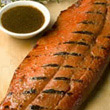
Grilled Fish: How to Grill healthy Salmon

Grilling fish is tricky without a grill basket, but don't let that deter you:

Spray the fish with nonstick cooking spray or brush it very lightly with oil.

Place the fish around the edges of the grill, away from the hottest part of the fire (Don't try to lift up the fish right away; it will be stuck to the grill).

Start checking for color and doneness after a few minutes, once the fish starts to release some of its juices.

Flip it over when it's got light grill marks.

Fish on the grill needs to be attended very closely and only takes a few minutes per side. If the filets are an even thickness, fish can be cooked through by grilling it on one side only.


Sunday, March 2, 2008

The Nutritional Rules for the Road Part I

© Marilyn Joyce R.D.

It's actually pretty simple. If you want to be healthy and alive, you have to get foods with a life of their own into your body. So the following rules for the journey towards health and a vibrant life are very logical. We will begin on a positive note, with a list of only the DO's.

1. Select the freshest foods you can find! As food sits for long periods of time it becomes:
stale with poor flavor, texture and appearance,
rancid if it contains oils (grains, nuts, seeds),
depleted of nutrients which are destroyed by exposure to oxygen in the air.
2. Focus on fresh vegetables and fruits, and raw untoasted, unroasted grains and cereals.
3. Look for reliable sources, either within your area, or by mail order, for organic produce and grains, and use these as much as possible in your daily menus. Seek out the local or closest farmers' market and shop there for produce.
4. Use the simplest, shortest cooking methods possible when preparing your food in order to insure optimum retention of nutrients. In other words, steam vegetables only to the point of el dente, grill fish and chicken until just done, steam rice or grains until tender and then remove from heat immediately. Gently simmer on low heat versus rapidly boiling on a high heat.
5. Aim to eat at least 50% of your vegetables and fruits in their raw form. This preserves the vitamins, minerals and active enzymes, which may be destroyed by heat and water during the cooking process. Your body requires a full profile of all of these nutrients, which work together, when in proper balance, to create the potential for every metabolic function within the body to take place.
6. Eat the skins of your produce items (fruits and vegetables) whenever possible. Many of the essential nutrients are right under the skin.
7. Choose whole vegetables and fruits over their juices. The fiber which is discarded in the production of the juice is very high in vitamins, minerals and phytochemicals (plant chemicals), all of which are essential in the prevention of disease and illness. The juice contains only a portion of what is available in the whole food!
8. Season foods with natural condiments, such as fresh herbs, fresh garlic, onions, lemon or lime juice, peppers, organic and ethnic vinegars, vegetable flakes and powders, and spices.
9. Include a wide variety of foods in your diet. This insures a better balance of essential nutrients. What one food lacks, another contains!
10. Reduce your intake of fats, especially saturated fats. These include fats from dairy products and most animal protein sources, other than fish and seafood.
11. Use methods of cooking which do not require the addition of fats, or substitute the fats with vegetable broth, water, or fresh lemon juice.
12. Include small amounts of fats in your diet which are from plant oil sources, focusing on pure virgin olive oil, canola oil and sesame oil. Use them uncooked, in dressings, for salads and steamed vegetables.
13. Steer clear of any fats which are of a trans-fatty acid nature, or which incorporate hydrogenation in the processing. These include:
the wide array of margarines
salad dressings
mayonnaise
most commercial nut butters (eg. peanut butter)
roasted nuts and seeds
packaged and frozen baked goods, cookies, crackers
snack foods and snack bars
canned, packaged and frozen entree items
powdered, canned, refrigerated or frozen coffee whiteners
powdered flavored coffee mixes
non-diary creams and dessert toppings